



Have you ever placed an Alibaba order only to receive goods that look nothing like the sample? Or sent a deposit and watched the supplier go quiet?
Alibaba connects buyers with millions of suppliers and makes international sourcing accessible to businesses of almost any size. That is genuinely useful. But the platform’s scale also creates risks that catch buyers at every experience level — not just beginners. Understanding those risks before committing money is the most cost-effective thing any importer can do.
This guide covers the four main categories of Alibaba risk, how each one shows up in practice, and what to do before, during, and after placing an order.
Not every listing on Alibaba belongs to a manufacturer. A significant portion come from trading companies — intermediaries who source from factories and add their margin. Some are transparent about this. Many are not.
Buying through an undisclosed trading company creates problems beyond price. Your specifications pass through a third party who may misunderstand or restate them. When quality issues arise, you have no direct relationship with the factory that made the goods. Resolving defects or requesting changes becomes a game of telephone.
The most reliable way to identify a trading company is to ask for their business license and match it to their factory address. Factories typically specialize in one product category. Trading companies often list hundreds of unrelated items. Evaluating factory production capability — through license review, product range analysis, and direct factory questions — is a foundational step before any order.
The most common Alibaba scams follow predictable patterns. The bait-and-switch: a supplier sends a perfect sample, then ships lower-quality goods at bulk. The disappearing deposit: a professional-looking supplier collects a T/T payment and vanishes. The invoice manipulation: goods are declared at an artificially low value for export, then buyers are asked to pay the difference into a personal account — creating customs risk on the receiving end.
None of these are inevitable, but all of them are common enough that buyers should treat any new supplier as unverified until checks are complete.
Alibaba’s Verified Supplier program puts third-party auditors on-site to assess factory facilities, QC systems, and certifications. This is meaningful. It reduces the risk of dealing with a fraudulent or nonexistent company, but it does not eliminate supplier, product, or order-level risk. The audit covers the supplier’s systems at a point in time — not your specific product, not your specific order, and not how the factory operates six months after the audit.
For a full explanation of what the badge covers and what it does not, Alibaba Verified Supplier status explains the scope of the audit, how to read the report, and what due diligence steps remain on the buyer’s side regardless of verification status.
The first order is perfect. The second is mostly fine. By the fifth, materials have changed, workmanship is looser, and the product that won your customers has quietly been replaced by something cheaper.
Quality fade is one of the most common and least-discussed Alibaba risks. Once a supplier has established a relationship, the commercial incentive to maintain the original standard weakens. Without ongoing inspection, buyers often notice quality decline only after customer complaints arrive.
Prevention requires treating quality as a process, not a one-time check. Approved samples should be retained as physical benchmarks. Third-party inspections should be scheduled at regular intervals, not only for the first shipment.
A sample from Alibaba is a marketing tool as much as it is a quality benchmark. Suppliers often use their best workers, best materials, and most careful assembly for samples. Bulk production runs under different conditions.
The only protection is to specify that the sample must be produced from the same production line, materials, and workers that will be used for bulk. And to inspect a random selection from bulk production against that sample before releasing payment. Managing sample orders from China covers how to document specifications, what to test, and how to use samples as binding quality benchmarks rather than promotional objects.
Electronics sold in the US may need FCC compliance. Products sold in Europe often need CE marking. Children’s products need EN71 (EU) or CPSIA (US). Cosmetics face their own regulatory frameworks in every major market.
Alibaba suppliers regularly claim certifications they do not have, or present certificates that are expired, for a different product, or simply fabricated. The responsibility for ensuring compliance rests entirely with the importer, not the supplier. Goods that fail to meet destination-market standards can be seized at customs, recalled, or result in legal liability if a consumer is harmed.
Before placing any order in a regulated category, request the actual certificate documents and verify them with the issuing body or a third-party testing lab.
Direct bank transfer (T/T) is common in B2B trade, but it is risky for new suppliers because once the money is sent, buyer recourse is limited. If the supplier disappears or ships defective goods, recovery is difficult without a pre-agreed dispute mechanism.
Alibaba Trade Assurance provides payment protection and dispute support when orders are not shipped on time or do not meet agreed quality terms. It works best when specifications, inspection standards, delivery dates, and refund terms are clearly written into the order. Dispute resolution still requires documented evidence, so inspection records and a detailed purchase contract are essential.
A standard payment structure for new suppliers: 30% deposit, 70% balance after pre-shipment inspection approval. Never pay 100% upfront to an unverified supplier.
The Alibaba price is not the landed price. Between the factory quote and the goods arriving at your warehouse, buyers typically add freight, cargo insurance, customs duties, port fees, customs brokerage, inspection costs, and packaging. In some categories, these costs can add 30–60% or more to the factory price, depending on product type, freight mode, duty rate, and destination.
Buyers who compare only factory quotes often discover the economics of a product change completely once landed cost is calculated. Understanding import duty on China goods is an essential part of this calculation, particularly as US tariff policy on Chinese goods has changed significantly since 2018 and continues to shift.
Sharing original product designs with a supplier creates real IP exposure. An unscrupulous supplier may sell your design to competitors or produce it independently on other platforms. For China manufacturing, a China-specific NNN agreement is usually stronger than a generic Western-style NDA because it addresses non-use, non-disclosure, and non-circumvention. Enforcement in China is still difficult and expensive, so prevention is more reliable than litigation.
The practical response is to share only the information necessary for each stage of production. Design files do not need to go to the supplier before contracts are signed. Tooling should be registered and ownership documented.
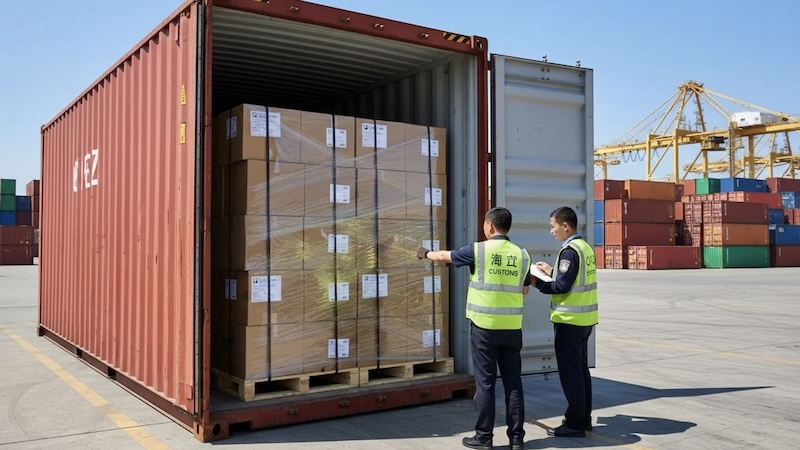
Most customs delays on China-origin shipments come from documentation problems — incorrect HS codes, vague product descriptions on commercial invoices, missing certificates, or declared values that do not match purchase orders. Understanding shipping documentation requirements before the first shipment prevents the most common errors that cause goods to be held at customs.
Responsibility for export documentation typically rests with the supplier. But the consequences of errors fall on the importer. Build document review into your pre-shipment checklist, not your customs clearance process.
FOB and EXW are the most common shipping terms on Alibaba. They define very different risk and responsibility structures. Under EXW, the buyer is responsible from the factory door — including export declaration in China, which many buyers are not positioned to handle. Under FOB, responsibility passes at the port of origin, which is a more practical starting point for most importers.
Choosing the wrong Incoterm can create unexpected costs and logistics gaps. FOB vs EXW for importers explains what each term actually means in practice and which situations favor each approach.
Ocean freight from China to the US takes 30–40 days door-to-door under normal conditions. Port congestion, weather, carrier schedule changes, or customs delays can extend this significantly. Inventory planning should account for delays, not just the carrier’s estimated transit time.
Goods can also be damaged in transit. Packaging specifications — including carton strength, internal cushioning, and stacking limits — should be confirmed in the purchase order, not left to the supplier’s judgment. Cargo insurance is available and should be used for any shipment of meaningful value.
Vet before you pay. Request business licenses, factory photos, production records, and certification documents. Conduct a video call. Ask technical questions about your specific product. A supplier who cannot answer specific questions about their own production process is telling you something important.
Specify everything in writing. A detailed purchase order covering materials, dimensions, tolerances, packaging, labeling, defect acceptance limits, and delivery dates is your primary legal protection. Verbal agreements resolve nothing in a dispute.
Inspect before payment release. A third-party pre-shipment inspection when 80–100% of goods are produced and packed gives you documented evidence of conformance or defects before the balance is paid. This is the buyer’s most effective point of leverage.
Start small with new suppliers. A test order before a full container exposes quality and communication issues at manageable cost. Suppliers who perform well on small orders have earned larger ones.
Q1: Is Alibaba safe to buy from?
The platform is legitimate, but not every supplier on it is reliable. Alibaba provides tools — Trade Assurance, Verified Supplier audits, dispute resolution — that reduce risk. These tools do not replace buyer due diligence. Treat every new supplier as unverified until you have completed your own checks.
Q2: What is the biggest Alibaba scam to watch out for?
One of the most financially damaging scams is the disappearing deposit — a supplier collects a T/T payment and disappears. For new suppliers, use Alibaba Trade Assurance or another structured payment protection method whenever possible, and never send the full payment upfront without an inspection.
Q3: Is the Alibaba Verified Supplier badge trustworthy?
It is a useful signal. The badge means a recognized third-party auditor has visited the factory and assessed their operations. It reduces fraud risk, but it does not eliminate supplier, product, or order-level risk. It does not guarantee product quality, production consistency, or that the supplier’s current operations match the audit. It should be one input in your vetting process, not the only one.
Q4: How do I know if I’m dealing with a factory or a trading company?
Ask for the business license and check the registered address against the factory address. Ask detailed technical questions about production — a salesperson at a trading company usually cannot answer questions that a factory engineer would answer easily. Request a factory video tour and observe whether the production equipment matches your product category.
Q5: What payment method is safest on Alibaba?
Alibaba Trade Assurance is usually the safest platform-based option for new suppliers. It provides payment protection and dispute support, but it only works well when order terms, specifications, and inspection standards are clearly documented. For large orders, a bank Letter of Credit provides the highest security but is more complex. Avoid large direct T/T payments to any new supplier regardless of how professional their profile appears.
Q6: Can I negotiate prices on Alibaba?
Yes. Alibaba prices are starting points, not fixed offers. Volume, payment terms, packaging simplification, and repeat business are all legitimate negotiation levers. The listed price is rarely the best available price. See how verified sourcing protects importers in practice.
Alibaba offers real access to one of the world’s most productive manufacturing ecosystems. That access comes with supplier risk, quality risk, financial risk, and logistics risk — all of which are manageable with the right processes in place. For buyers who want independent verification before committing to a supplier, China supplier verification services cover legal checks, litigation records, and factory credentials that Alibaba’s platform does not provide.
The buyers who source successfully from Alibaba treat every new supplier as unverified, every sample as a test, every payment as a risk event, and every shipment as something to inspect before the balance clears. That discipline is what separates the importers who build profitable sourcing operations from those who accumulate expensive lessons.
 English